Posts

Getty Center Excursion

Image
At the Getty center, there was an exhibit named Golden Kingdoms: Luxury and Legacy in the Ancient Americas. The types of items on display were typically archeological finds such as clothing, decorations and others that are found in South America. They were organized by different groups of people, such as the Moche, Olmecs, and Aztecs. The main objects that attracted my eyes were the flashy Octopus Frontlet and Tumi knife. The Octopus Frontlet is of Moche origin, found in La Mina, Peru. It was made during AD 300-600, and is made of gold, chrysocolla and shells. The Frontlet depicts a face that, due to the iconography of the Moche culture, can be identified as symbolizing the Spider Decapitator. The face has two clawed feet and tentacles that all end in catfishes. Although gold was considered valuable in Europe, other materials were considered valuable over gold in South America. Materials such as feathers were considered more valuable than gold and were used to show luxu...
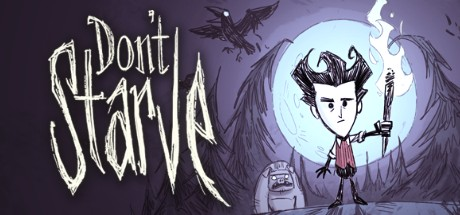
Memento Mori in Roguelike Games

Image
In Humanities lecture, we learned about the latin phrase “ m emento mori,” which means “Remember that you will die.” In lecture, it was used in paintings by painters in order to remind the viewer of their mortality. This part of lecture reminded me of roguelike games. Most roguelike games have a goal that players aim towards and where death leads to the loss of the character and reset of progress towards that goal. Don't Starve Sword of the Stars: The Pit In roguelike games such as “Don’t Starve” or “Sword of the Stars: The Pit,” dying in the game completely resets the players progress, and often removes the world so the player has to make a new save. This makes the player constantly mindful of placing their character in excessive risk. “Realm of a Mad God” portrays this idea in a large scale online multiplayer game. In this game, players pick a class, and then set out fighting random monsters to level and find more equipment to progress further. The player i...

Mushishi: Ginko representing Kant's "Enlightenment"

Image
Mushishi In Humanities core, we learned about Immanuel Kant. From my understanding, Kant argues that the Enlightenment is when a person leaves from the “minority,” that they inflict upon themselves. The “minority” is the part of society that does not improve their comprehension without the help of another. After learning about Immanuel Kant, I found connections between his philosophy and the show “Mushishi.” Ginko “Mushishi” is a show that centers around the main character, Ginko, and mysterious creatures called Mushi. Mushi are the most basic form of life, that mimic nature and come in a variety of shapes. They are only able to be seen by a few people and exist as plants, diseases or even phenomena as rainbows. Little is known about the Mushi and Mushishis are people who study the Mushi to find out what Mushi are and why they exist. Ginko is a mushishi and tries to study the Mushi for an answer to these questions. Based on Kant’s philosophy, Ginko would not be par...

The Rise and the Fall: Yokohama in Hamatora Series

Image
Hamatora the Animation Re: Hamatora Hamatora the Animation, adapted by studio NAZ, and Re: Hamatora, adapted by studio Lerche, contains many ideas that could be connected to the empire and its ruins from the humanities lecture. The Hamatora series is set in Japan and follows a detective agency, Hamatora, which is a “minimum holder private investigator duo” consisting of Nice and Murasaki. Minimums are small miracles that a limited amount of people, called minimum holders, possess, which are special powers activated under specific circumstances. The Hamatora series connects to ideas of empire because the components for its plot correspond with the rise and fall of empire and the information gained from ruins of empires. Nice The Hamatora series has connections to the novel, Waiting for the Barbarians by J. M. Coetzee, from the humanities course because of its connection to the theory of empires. In the series, there are two dist...

Hyperion Corporation, An Empire

Image
http://borderlands.wikia.com/wiki/Borderlands_2?file=Borderlands2boxart3.jpg Through the initial introduction of the humanities class, students were lectured on the theory of empires and how it is understood in literature. Rather than finding another connection to the theory of empires within more literature, I considered my list of games that could be used to base my understanding of the theory. While there were choices like Valkyria Chronicles , which contained an country overtaking territory from others for resources, or Planetside 2 , in which three different alliances combat for facilities on different continents, from my small collection of games, Borderlands 2 seemed to have a correlation with the concepts of empires. http://borderlands.wikia.com/wiki/Handsome_Jack?file=Handsome_Jack.png Borderlands 2 is set on a planet named Pandora, where the main antagonist, Handsome Jack, claims dictatorship over. The main importance of the Pandora is that it contains a Vaul...